
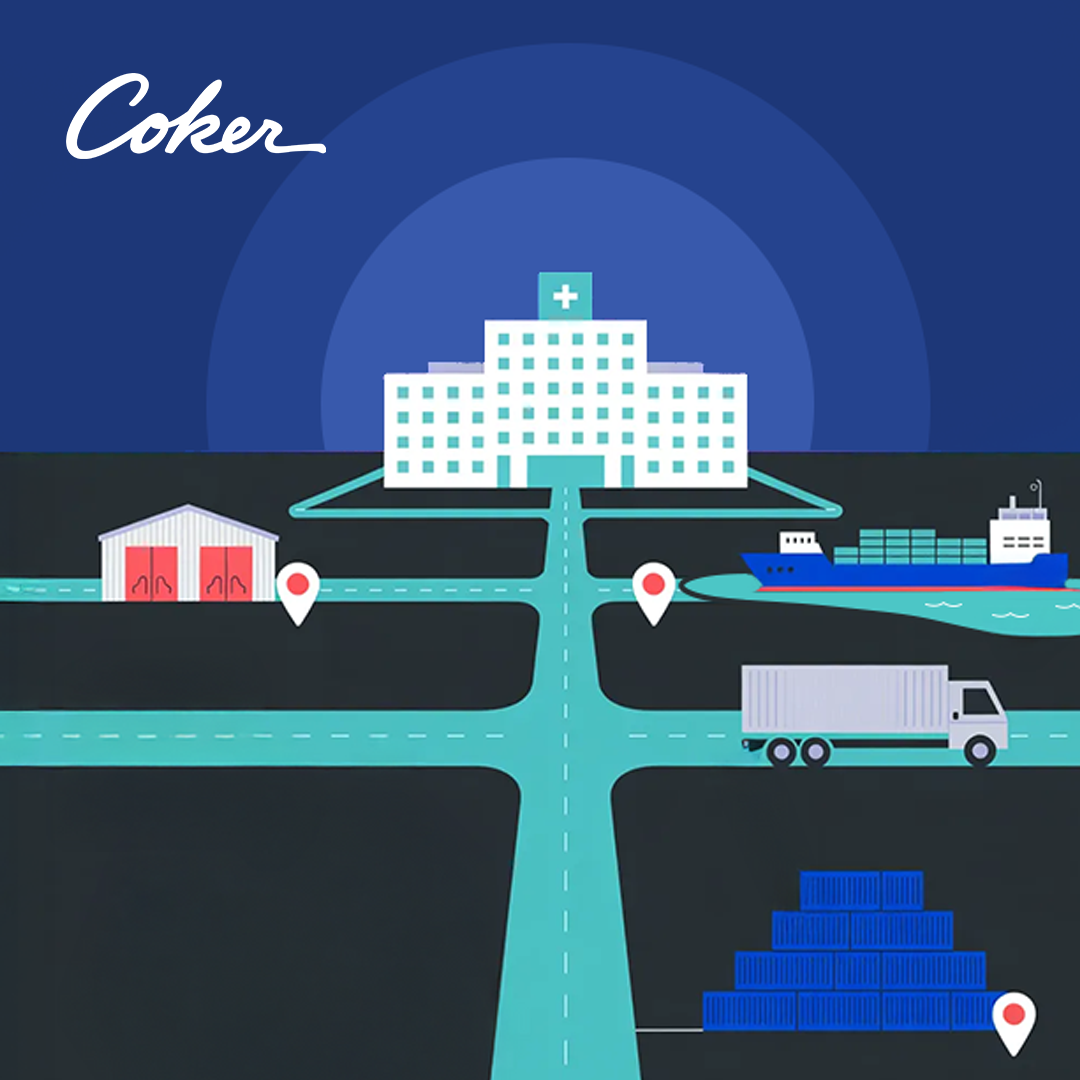
Redefining Healthcare Supply Chain: From Cost Center to Strategic Advantage
Why 2026 marks a turning point and how leading organizations are reshaping supply chain to support performance, resilience and growth.
Healthcare organizations are not just facing disruption—they’re operating within it.
In 2026, that shift is especially visible in the supply chain.
What was once treated primarily as a sourcing function is now closely tied to margin performance, clinical operations, and the ability to support care beyond traditional settings. For many organizations, the challenge isn’t recognizing change—it’s adapting quickly enough to respond meaningfully.
Disruption Is Now the Baseline
The supply chain environment has changed in ways that are unlikely to reverse.
Cost pressures remain persistent, particularly across purchased services and technology. Supply disruptions are no longer isolated events; they are now something organizations expect and plan for. At the same time, vendor consolidation continues to narrow negotiating leverage, while care delivery is expanding into more distributed, non-acute settings.
“Supply disruptions are now part of the normal state of business.”
Rather than planning for stability, organizations are increasingly being asked to plan for variability and to build operating models that can flex alongside it.
A Growing Impact on Financial Performance
As supply chain costs expand beyond traditional categories, their influence on overall performance is becoming more pronounced.
When accounting for purchased services, capital, and related spend, supply-related costs can represent a substantial portion of an organization’s total expense base—often approaching half.
Despite this, many organizations continue to manage supply chain activities in fragmented ways, with decisions spread across departments and limited visibility into the full cost structure.
This disconnect is where many organizations begin to see both risk and opportunity emerge.
Where Opportunity Is Often Missed
One area where this is particularly evident is purchase services.
These categories frequently operate across multiple departments with limited central coordination, even though they function as complex, high-cost components of the organization. Contracts may be in place, but not consistently followed. Cost increases can accumulate gradually, without clear visibility, until they become material.
Organizations that take a more structured approach—bringing greater alignment, governance, and transparency to these categories—often uncover meaningful opportunities to improve performance in a relatively short timeframe.
Moving Beyond Unit Price
The way organizations evaluate supply decisions is also beginning to shift.
Historically, sourcing has focused heavily on unit price. While still important, that perspective no longer captures the full picture. Leading organizations are taking a broader view—considering total delivered cost and the factors that influence it, including logistics, contract terms, utilization patterns, and clinical outcomes.
This shift also requires closer coordination between clinical, operational, and financial stakeholders. Supply decisions are no longer isolated—they are increasingly tied to how care is delivered and how performance is measured across the organization.
An Expanding Supply Chain Footprint
As care continues to move beyond the hospital, supply chain responsibilities are expanding with it.
Ambulatory settings, hospital-at-home models, and other distributed care environments introduce new complexities in how products are sourced, delivered, and managed. In many cases, existing contracts and processes were not designed to support these settings as they exist today.
“Supply chain is moving beyond the four walls of the acute care setting.”
Organizations that proactively adapt their supply chain strategy to these evolving care models are better positioned to maintain consistency, control, and efficiency across the continuum.
The Role of Data and Governance
As complexity increases, visibility becomes more important.
Many organizations are moving toward a more centralized, data-driven approach—often described as a supply chain “control tower”—to better understand performance, monitor compliance, and identify emerging risks earlier.
At the same time, artificial intelligence is beginning to play a larger role in supporting these efforts, from forecasting demand to automating procurement workflows. However, as adoption accelerates, so does the need for clear governance.
“What organizations need now is not just AI adoption, but AI governance.”
Without defined policies, oversight, and alignment, new technologies can introduce as much inconsistency as they resolve.
A More Integrated Approach
What’s becoming increasingly clear is that supply chain can no longer be managed as a standalone function.
Organizations that are making progress in this area are taking a more integrated approach—aligning supply chain strategy with clinical priorities, operational workflows, and financial objectives. They are also building more structured processes for responding to disruption, rather than relying on reactive decision-making.
This shift doesn’t happen all at once, but it does require a deliberate move toward greater coordination and accountability.
Looking Ahead
Supply chain is becoming a more central part of how healthcare organizations manage performance and navigate change.
The question is less about whether it needs to evolve, and more about how quickly organizations can put the right structures, visibility, and alignment in place to support what comes next.
For those that do, supply chain has the potential to become more than a source of cost pressure—it can serve as a stabilizing force in an increasingly dynamic environment.